

Individual and Relational Staff Practices
Key Practice #1: Shift your perspective.
When someone is behaving in an aggravating, possibly scary way, instead of thinking, “What is wrong with this person?” ask yourself, “What has happened to this person?” 11
Key Practice #2: Recognize how trauma and chronic stress show up.
It is vital to recognize the neurobiological effects and repercussions of trauma and chronic stress when encountering challenging behaviors in ourselves and others.
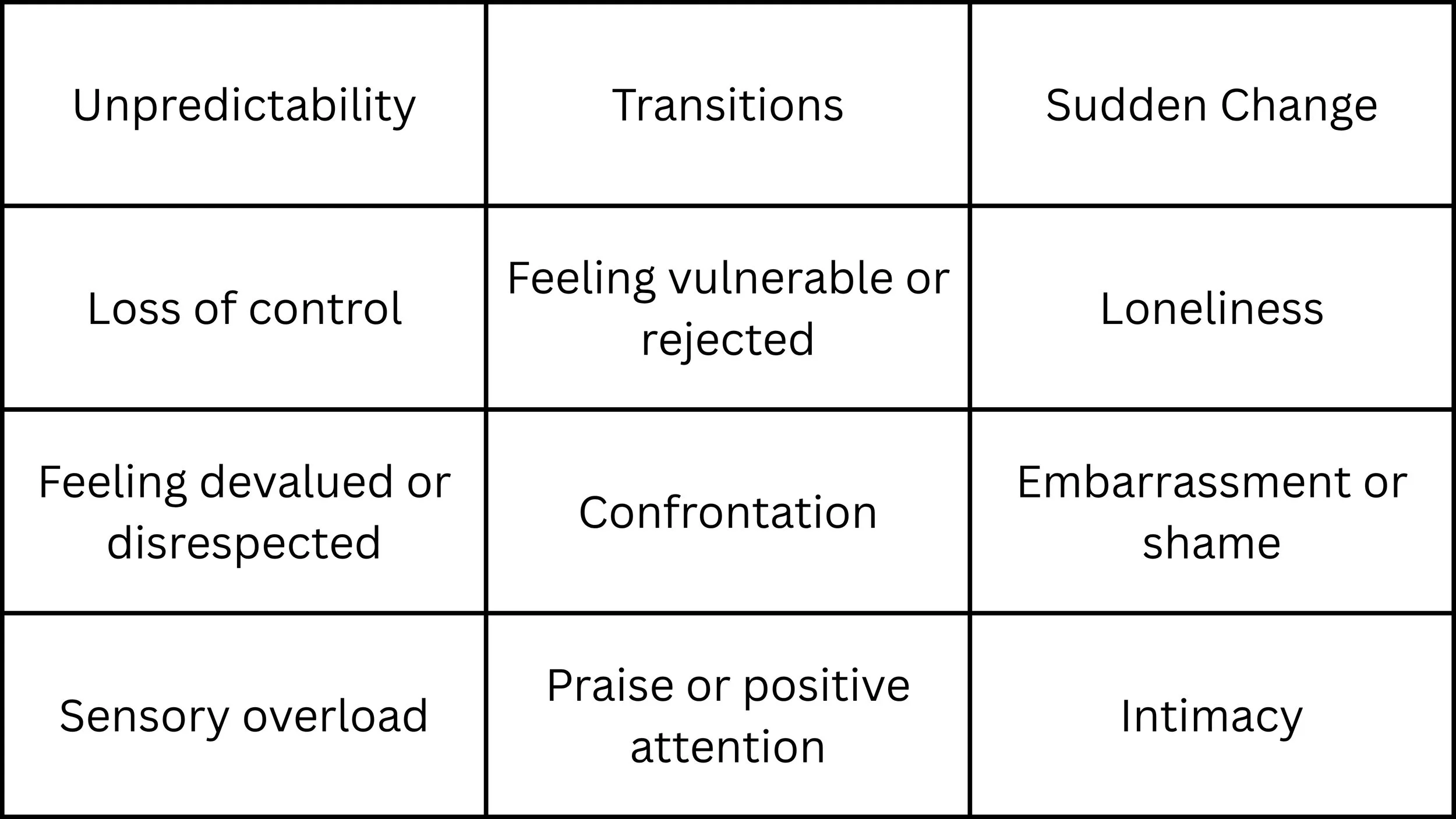
Key Practice #3: Identify common triggers and minimize them when possible.
Common triggers include:
Key Practice #4: Remember that aggravating behavior is a “cause for pause.”
Pause and breathe before responding to get rider back on the horse.
Key Practice #5: Seek to understand the unmet needs underlying challenging behaviors.
“Problematic” behaviors are usually unskillful communications of unmet basic human needs. Before responding to the behavior, pause, give yourself a moment for a few long, slow exhales, and instead of asking yourself “What is wrong with this person?” ask yourself, “What has happened to this person? What is happening here? What is the unmet need driving this unskillful behavior?”
Three basic human needs that we all have are:
the need for safety
the need for connection, caring, and respect; and
the need for a sense of agency and control, being able to do something about one’s situation, and having one’s efforts recognized and valued.
Recognize HALT (Hungry, Angry, Lonely, Tired) states, and provide support as needed.
If accessible, keep healthy snacks in your classroom or office to offer to students
Provide safe space for students to express their needs
Provide time and space for students to connect with you, or other class/community members
If accessible, allow time for students to have quiet time throughout their day
If a person is becoming dysregulated (i.e., they are having a fight, flight, or freeze reaction), often it is because one of these basic needs is not being met. Responding by trying to meet these basic needs can help to de-escalate a situation. Further, regularly interacting with others in a way that attends to these basic needs can help to prevent dysregulation and promote social-emotional wellness.
Key Practice #6: Use tools to communicate feelings of dysregulation.
Tools include:
Rider off horse hand signal
See also tools for Peace Corners and Cool Down Kit
This work is licensed under a Creative Commons Attribution-NonCommercial-ShareAlike 4.0 International License.