Student Behavior through a
Understanding
Trauma-Informed Lens
MODULE 01
Welcome to Module 1
Before we begin exploring student behavior, we are going to start with ourselves. Teaching and supporting students is meaningful work, but it can also be stressful, demanding, and emotionally complex.
In this module, you will reflect on your own relationship to stress. You will explore how stress may show up in your thoughts, emotions, body, and reactions. You will also begin identifying regulation strategies that can support you during stressful moments at school.
This module is not about judgment or perfection. It is about awareness. When we better understand our own stress responses, we are more able to pause, regulate, and respond with intention.

Module Learning Objectives
By the end of this module, you will be able to:
Identify personal signs of stress and dysregulation in school settings.
Reflect on how stress affects your thoughts, emotions, body, and reactions.
Recognize why educator regulation matters in trauma-informed practice.
Practice one grounding technique when feeling stressed.
How This Module Works
Each module in this course follows the same learning flow:




Spark — Learn new content.
Reflect — Consider how this shows up in your own setting.
Practice — Try one practice related to the content.
Integrate — Notice what you learned, what worked, and what you would do differently next time.



Lesson 1.1
Welcome to the Course.
Welcome to Understanding Student Behavior Through a Trauma-Informed Lens.
In this course, we will explore how trauma and chronic stress can shape behavior, relationships, learning, and classroom experiences. We will also look at practical ways educators can pause, reflect, and respond to challenging behavior with more understanding and intention.
Because this course includes sensitive topics such as trauma, stress, dysregulation, and challenging behavior, we invite you to move through the content with care. You do not need to rush or push through discomfort. Pause when needed, take care of yourself, and return when you are ready.
This course is designed to support—not judge—educators. The goal is not perfection. The goal is awareness, practice, and small shifts that can make a meaningful difference.
As you move through the course, use the workbook to capture your reflections, try the practices, and notice what feels useful in your own setting.
Reflect
Before moving forward, take a few minutes to reflect on why you are here and what you are hoping to better understand.
You may respond to one or more of the prompts below. Fill in as many as feel useful to you.

Behavior Challenge Check-In
What student behavior-related challenge are you hoping to better understand?
Reflection Page
This page can mirror the Reflect activity above and include:
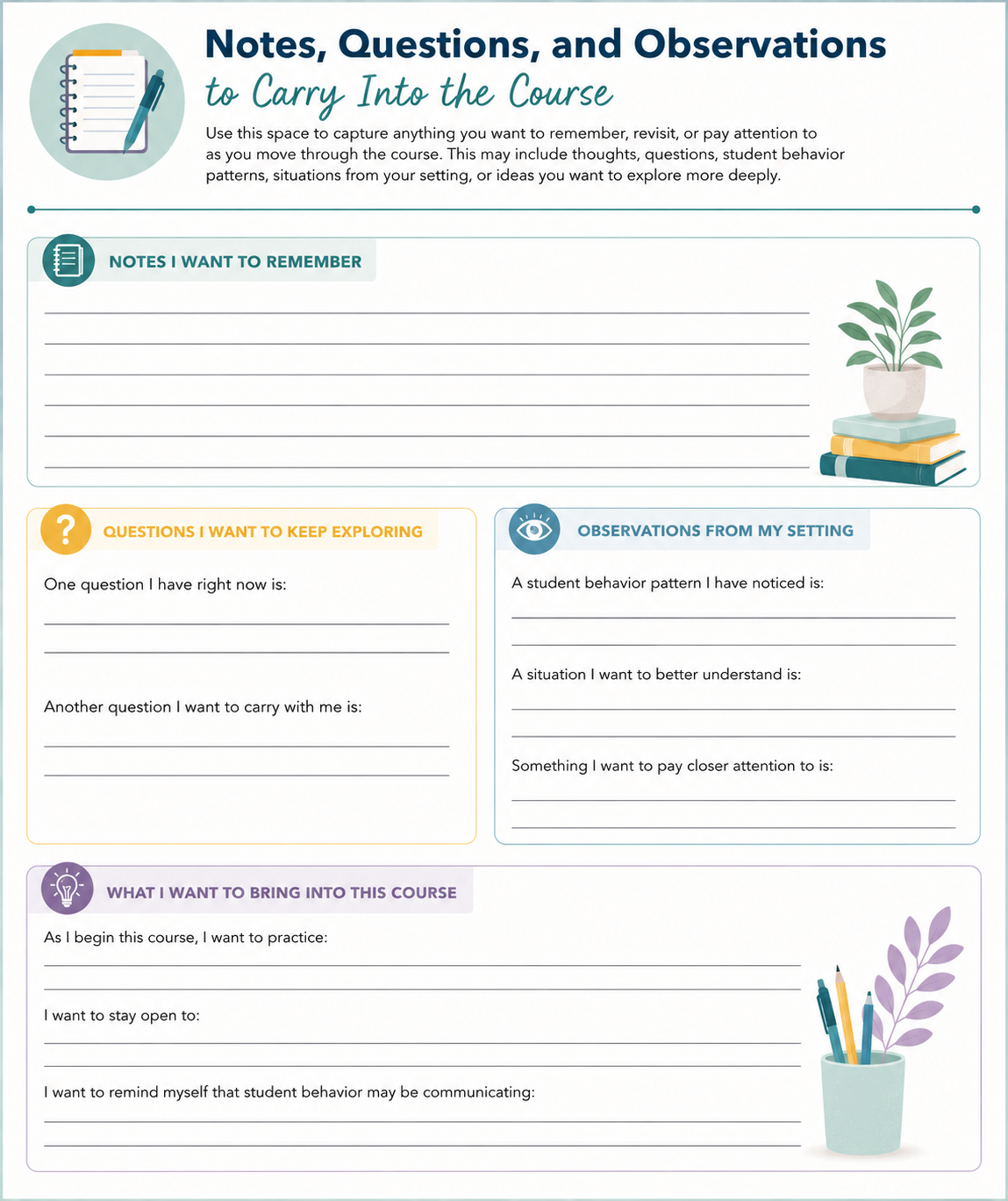
A behavior challenge check-in using a checklist or dropdown-style format
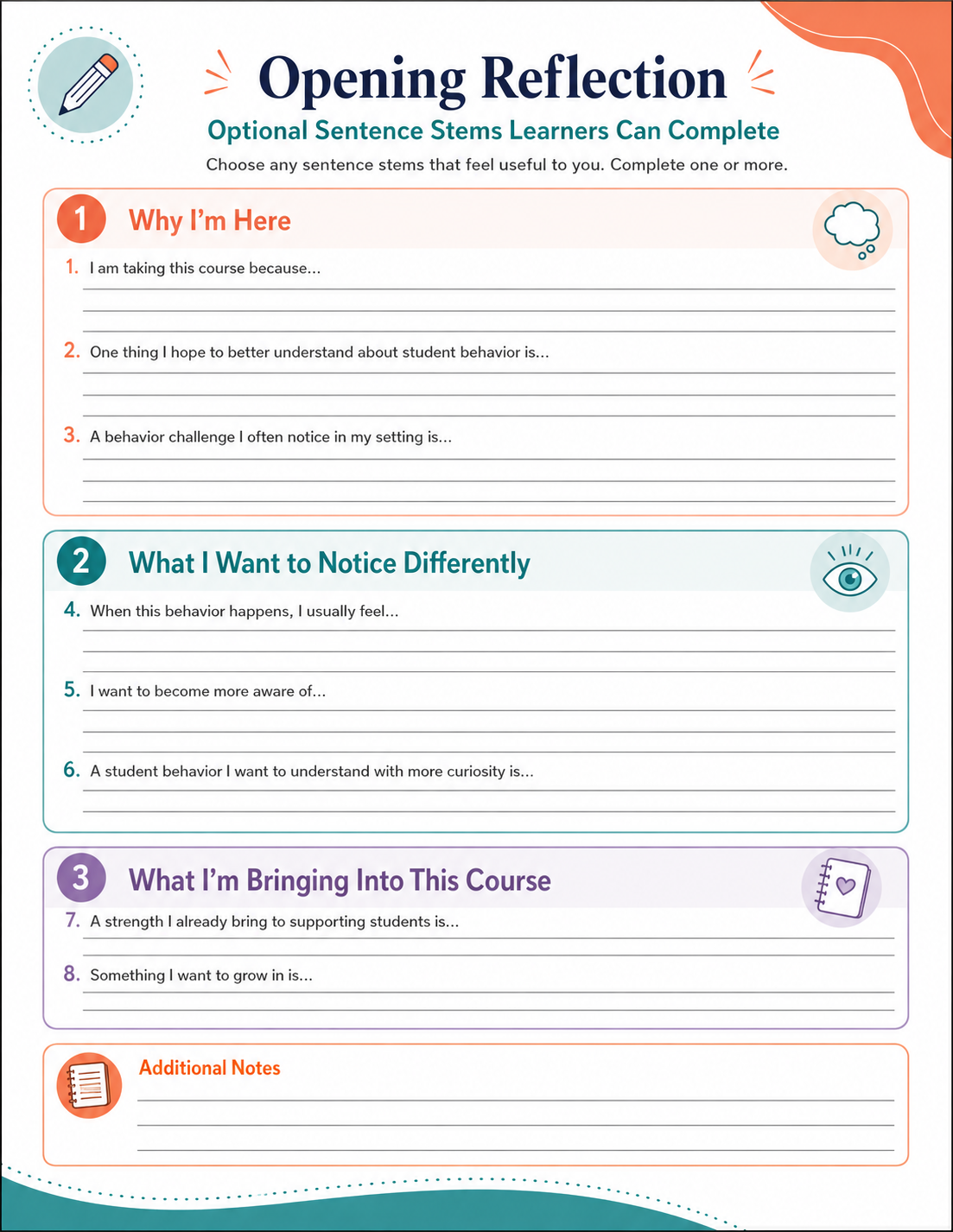
Optional sentence stems learners can complete
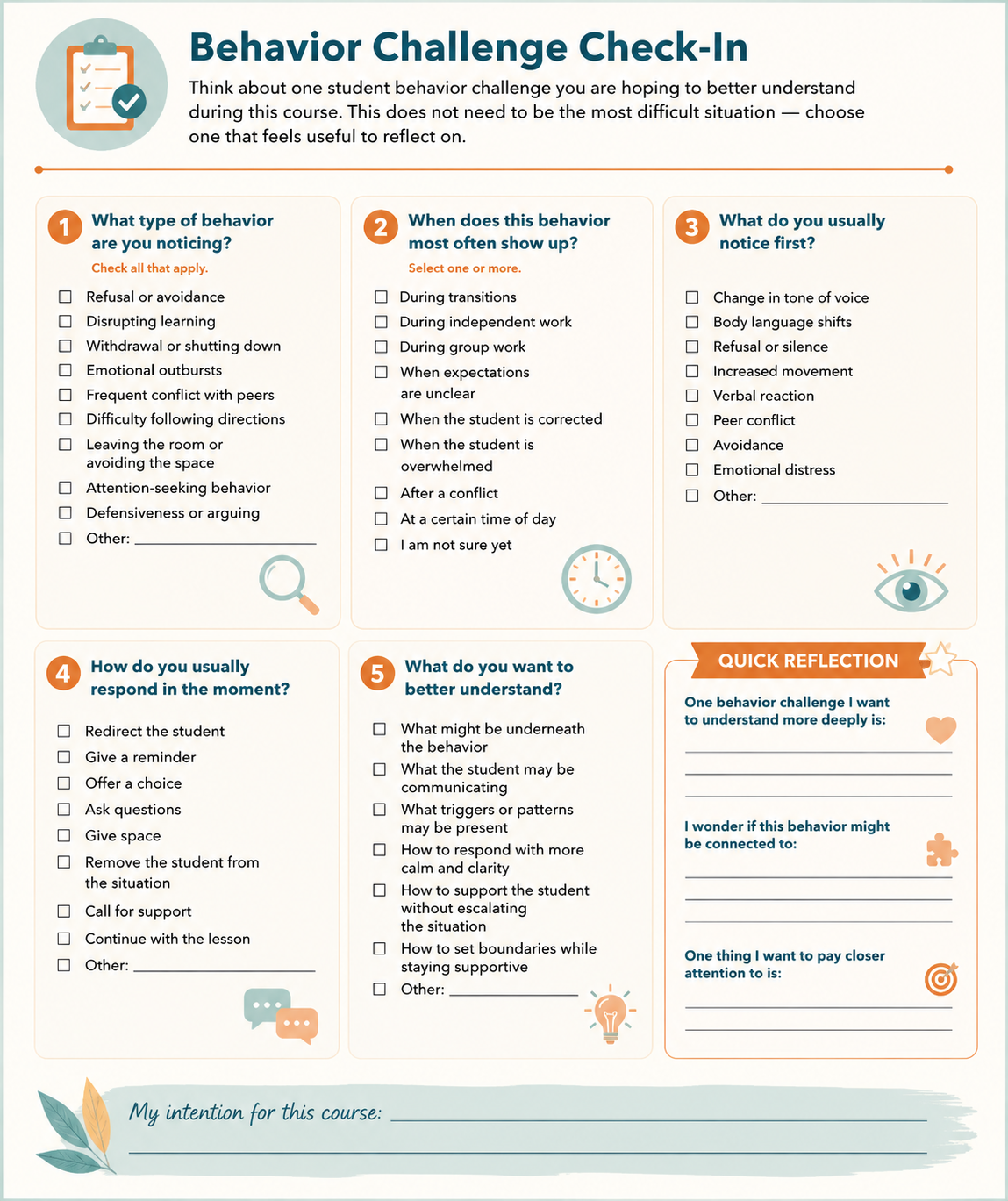
Space for learners to write any additional notes, questions, or observations they want to carry into the course
Lesson 1.2
Understanding Ourselves Under Stress
Spark
Teaching and supporting students is meaningful work, but it can also be stressful, demanding, and emotionally complex.
Educators often hold many responsibilities at once. You may be supporting students’ academic needs, responding to behavior, managing transitions, communicating with families, completing documentation, collaborating with colleagues, and adapting to unexpected challenges throughout the day.
Stress affects all of us. It can influence how we think, how we feel, how our bodies respond, and how we react to others.
Trauma-informed practice begins with understanding ourselves because our own stress response can shape how we interpret and respond to student behavior. When we are more regulated, we are more able to pause, notice what is happening, and choose a response that supports safety, connection, and learning.
Before we go further, take a moment to imagine yourself in a stressful moment at school.
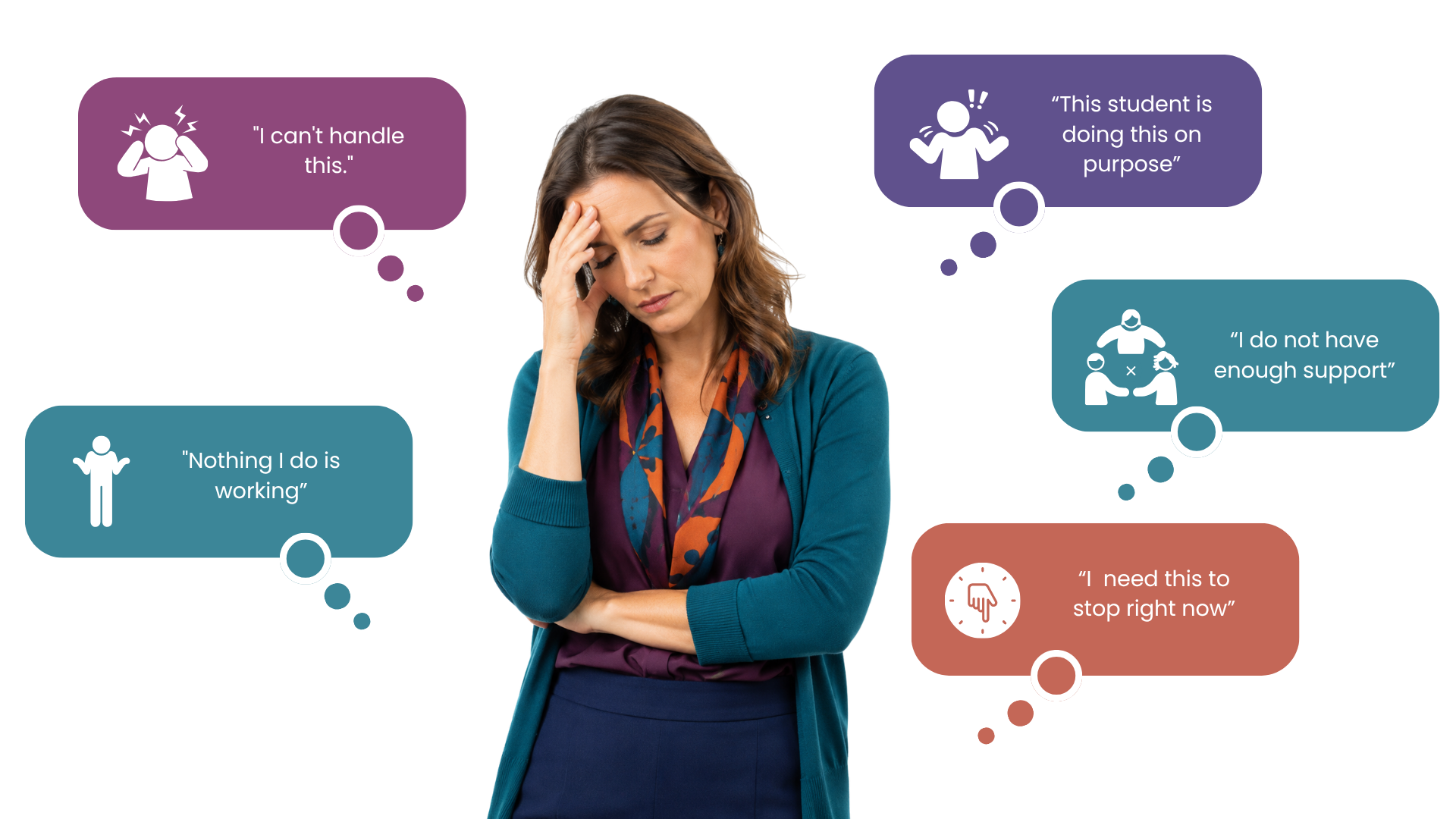
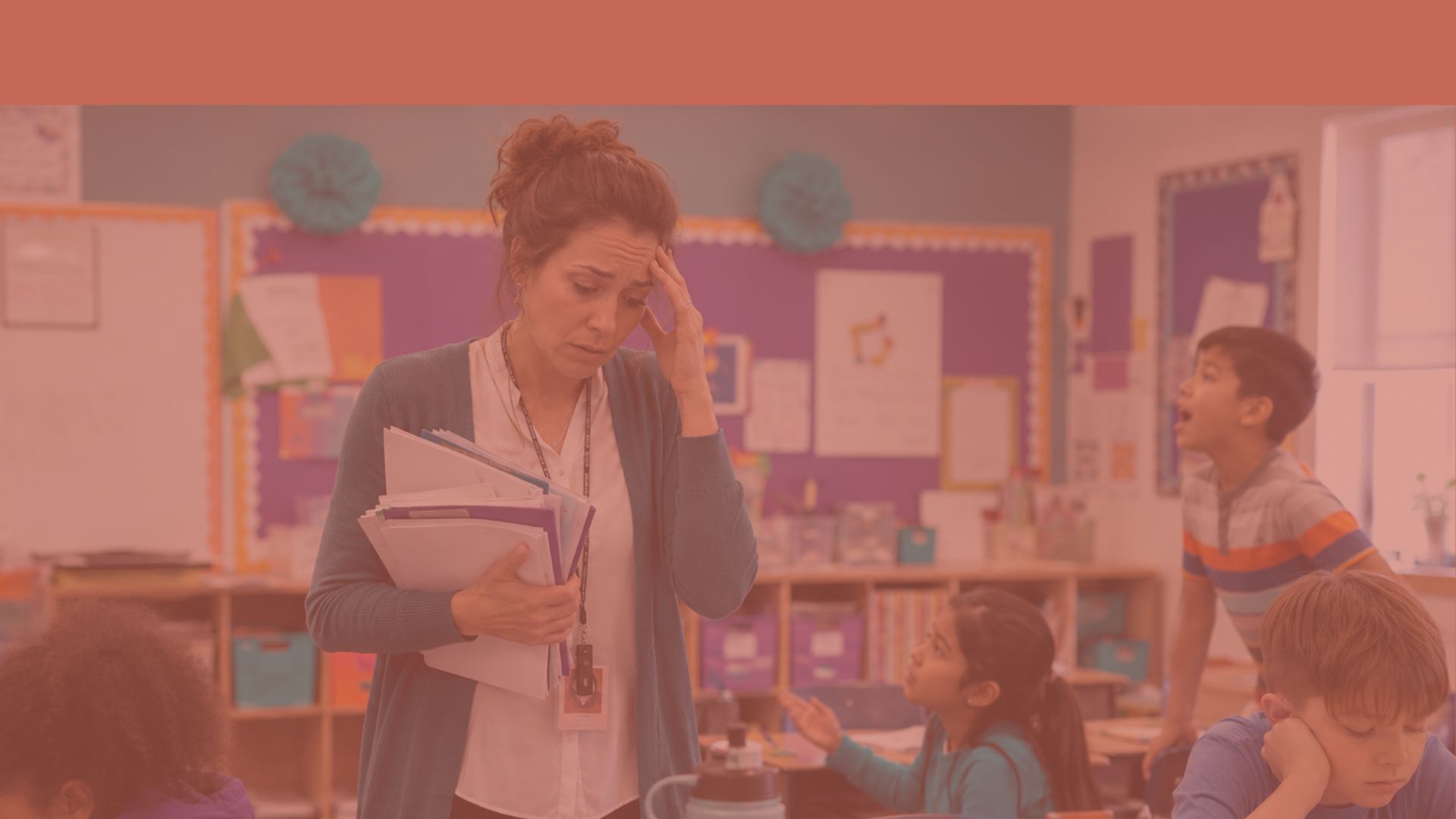
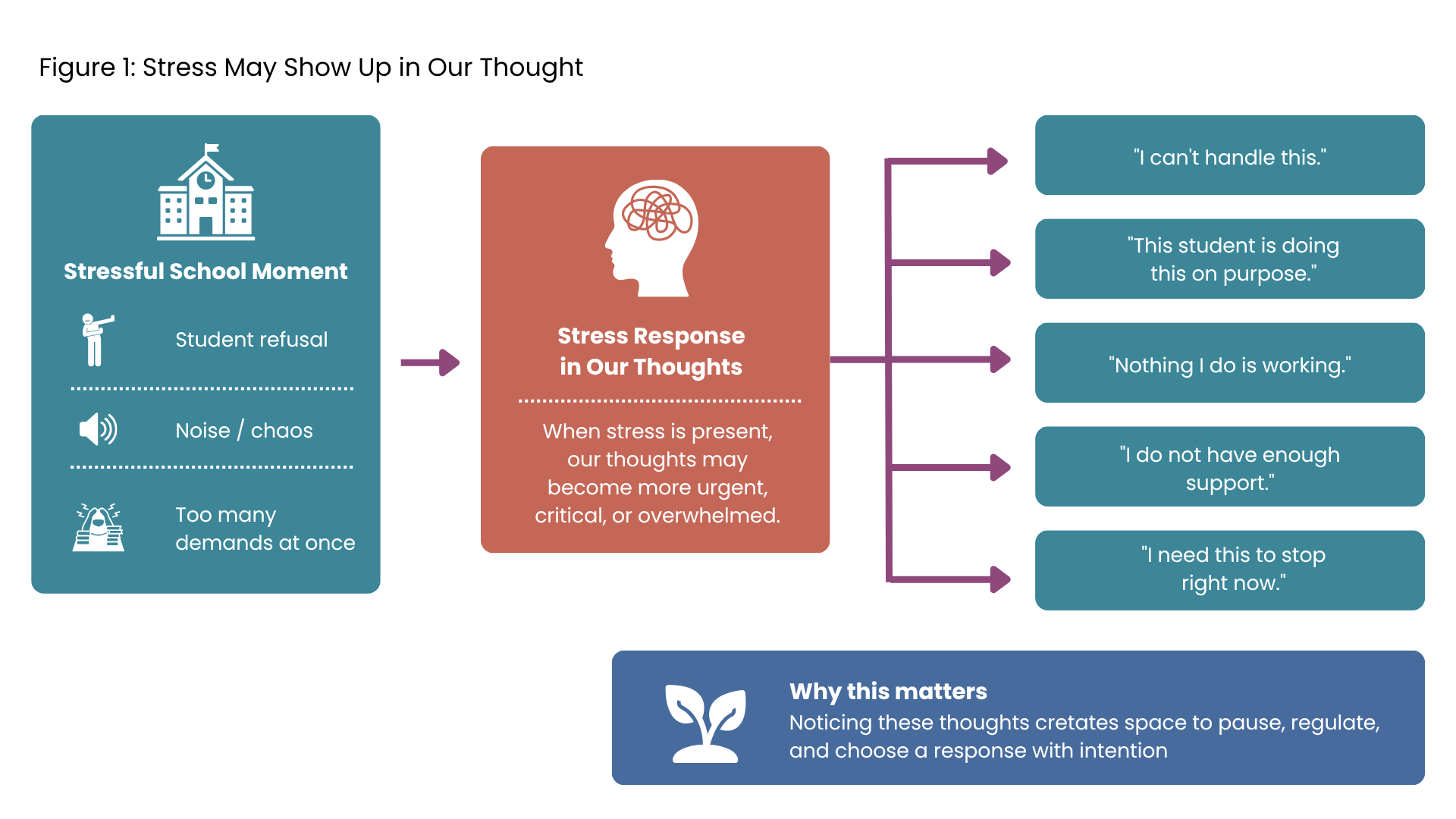
Maybe a student is refusing to follow directions. Maybe the room feels loud or chaotic. Maybe you are trying to support one student while several other things are happening at once. Maybe you are tired, frustrated, or feeling pressure to respond quickly.
As you listen to Martha’s story in the video, think about a time when you have felt this way.
In moments like these, it is common for stress to affect how we respond. We may react more quickly than usual. We may take behavior personally. We may become more controlling, shut down, avoid the situation, raise our voice, or feel overwhelmed.
These responses are not signs of failure. They are signs that stress is present.
The goal is not to be calm all the time. That is not realistic. Instead, the goal is to begin noticing what happens inside us when stress shows up. When we can notice our own stress response, we create more space to pause, regulate, and choose a response with intention.
Stress can show up in different ways.
Martha’s story
Stress may show up in our thoughts