

Key Concept #1 Resilience, the adaptive response to serious hardship, requires both internal strengths and external supports.
- Resilience involves facing adversities and maintaining a staunch optimism that we can overcome them. It requires that we do more than merely survive difficult times, but that we recognize the difficult situation AND believe that we can overcome them.
- Safe, stable, and nurturing relationships and environments are critical for developing resilience. Such relationships and environments buffer us from the harmful effects of adversity and help us to develop the necessary skills to manage the adversities we may face.
- We can always improve our ability to strengthen coping skills and adapt to new challenges. It is never too late to build resilience.
Key Concept #2 Post-traumatic growth is possible when we are given the opportunity to heal from trauma.
- Post-traumatic growth goes above and beyond resilience. Post-traumatic growth is positive change that some people experience after a traumatic event.
- People who experience post-traumatic growth may experience stronger relationships, enhanced inner strength, spiritual growth, greater appreciation for life, and improved ability to see and welcome new opportunities that alter life paths for the better.
Key Concept #3 Honoring and drawing from the strengths of our communities and people that have overcome adversities can foster healing and social emotional wellness.
- It’s not just about “What has happened to you?” but also, “What’s right with you? What has gotten you through?” Whether we are looking at ourselves or others, we can recognize, celebrate, and draw from practices and people–present-day and ancestral–that have made it possible to overcome adversity.
Key Concept #4 Trauma-informed, culturally responsive Social-Emotional Learning (SEL) helps to heal the injuries of trauma and contributes to our capacity to build resilience.
- The 5 core SEL Competencies put forward by CASEL (Collaborative for Academic, Social, and Emotional Learning), are: self-awareness, self-management, social awareness, relationship skills, and responsible decision-making. Programs that promote SEL have demonstrated positive impacts on a broad range of student social, emotional, and academic outcomes.
- Trauma can derail the development of these SEL competencies.
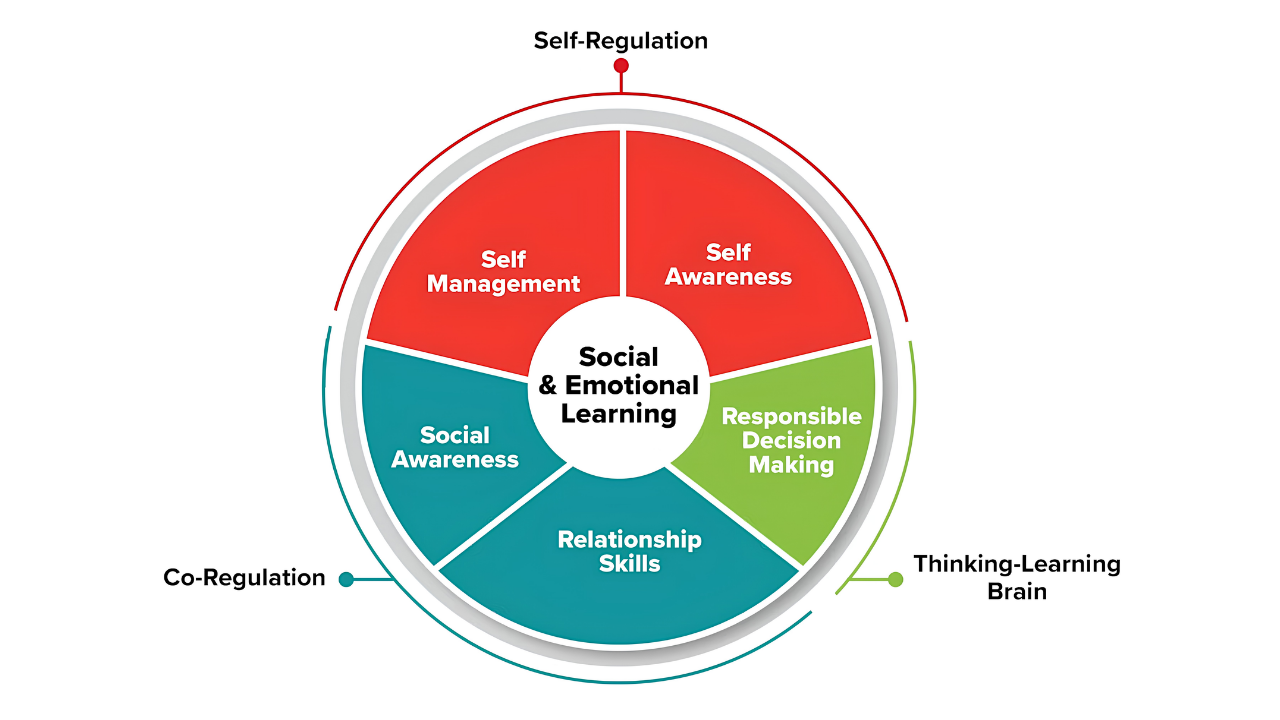
- HEARTS connects the 5 SEL competencies to trauma-specific concepts (Figure 6.1). Implementing HEARTS practices and procedures related to these concepts can strengthen the delivery of SEL programs for trauma-impacted youth.
- Self awareness and self management are the same as the trauma-specific concept of self-regulation. Our capacity for healthy self-regulation is compromised in the face of stress and trauma, and therefore, HEARTS promotes strategies to develop self-regulatory capacities (e.g., brain breaks, feelings charts, and Cool Down Kits).
- Social awareness and relationships skills relate to the trauma-informed concepts of co-regulation and compassionate and trustworthy relationships. The success of any SEL approach is dependent on positive, co-regulating relationships.
- Responsible decision-making requires the thinking-learning brain to be engaged. In order for the learning-thinking brain to engage in the face of stress, people need to be self-regulated and/or to have co-regulation from caring others.
- Trauma-informed SEL takes into account ways that trauma can derail development of healthy SEL competencies, and is delivered in a differentiated and compassionate manner.
- It’s important to teach students these skills not only through explicit instruction, but also through modeling these competencies as adults (and this can be tricky when we are stressed out ourselves).
Figure 6.1 Trauma-Informed SEL
Key Concept #5 SEL curricula need to be culturally responsive and anti-racist in order to be healing instead of harming.
- Most SEL curricula are based on white, Western, and individualistic ideals, which can lead educators to overlook the diversity of identities, needs, and culturally-based ways of being of their students.
- These ideals largely center whiteness as the norm, tend to revolve around educator comfort, and often suggest that some students or groups of students (Black and brown children) need SEL more than other students.
- SEL can sometimes be misused as a tool for controlling student behavior rather than as a method for promoting student well-being and learning. For example, SEL curricula are frequently implemented in a manner that leads to rigid norms around managing and regulating emotions and behavior, including determining which expressions of emotions are preferred and which behaviors are acceptable (e.g., be quiet and contained, be still, follow directions in a lock-step manner). These norms often fail to take into account students’ contexts.
- Culturally responsive SEL is asset based, affirms the diverse range of culturally-based ways of being in a school, recognizes resources that all students and educators bring, and is connected to student’s lives and experiences.