
Key Concept #1 Trauma makes us feel helpless and powerless.
- One thing that makes trauma so traumatic is that despite our attempts to overcome or escape the overwhelming stressor, we are unable to do so, which leaves us feeling helpless and powerless.
- When we further disempower someone by taking away their voice and their choice, this can be triggering or retraumatizing because it can echo with the helplessness they experienced in the face of traumatic events.
- Sociocultural trauma can leave historically oppressed and marginalized groups feeling hopeless and powerless both individually and collectively.
- Learned helplessness can develop in the face of repeatedly thwarted attempts at doing something to change a painful situation.
- Those with learned helplessness may need repeated offers of help or opportunities to “do something” about a painful situation, within the context of relational safety, in order to be empowered enough to take action.
- How to Counter Learned Helplessness
Key Concept #2 Empowerment through having voice and choice leads to well-being and resilience.
- When we have voice and choice in our work, we are happier, healthier, and more productive. When we have control over how, when, and where we work, it promotes our overall well-being.
- When we perceive that we have some control or agency over a stressor, this can help reduce the physiological effects of chronic stress.
- Having a sense of agency, that we can do something about our plight, can also help us heal in the face of trauma and toxic stress.
- Opportunities for social justice education, advocacy, and activism can counteract the sense of powerlessness and devaluation experienced by those who have experienced collective trauma and/or who have historically been oppressed and marginalized.
Key Concept #3 We are more likely to learn, grow, and make positive changes in our behavior when people in authority do things WITH us, rather than TO us or FOR us.
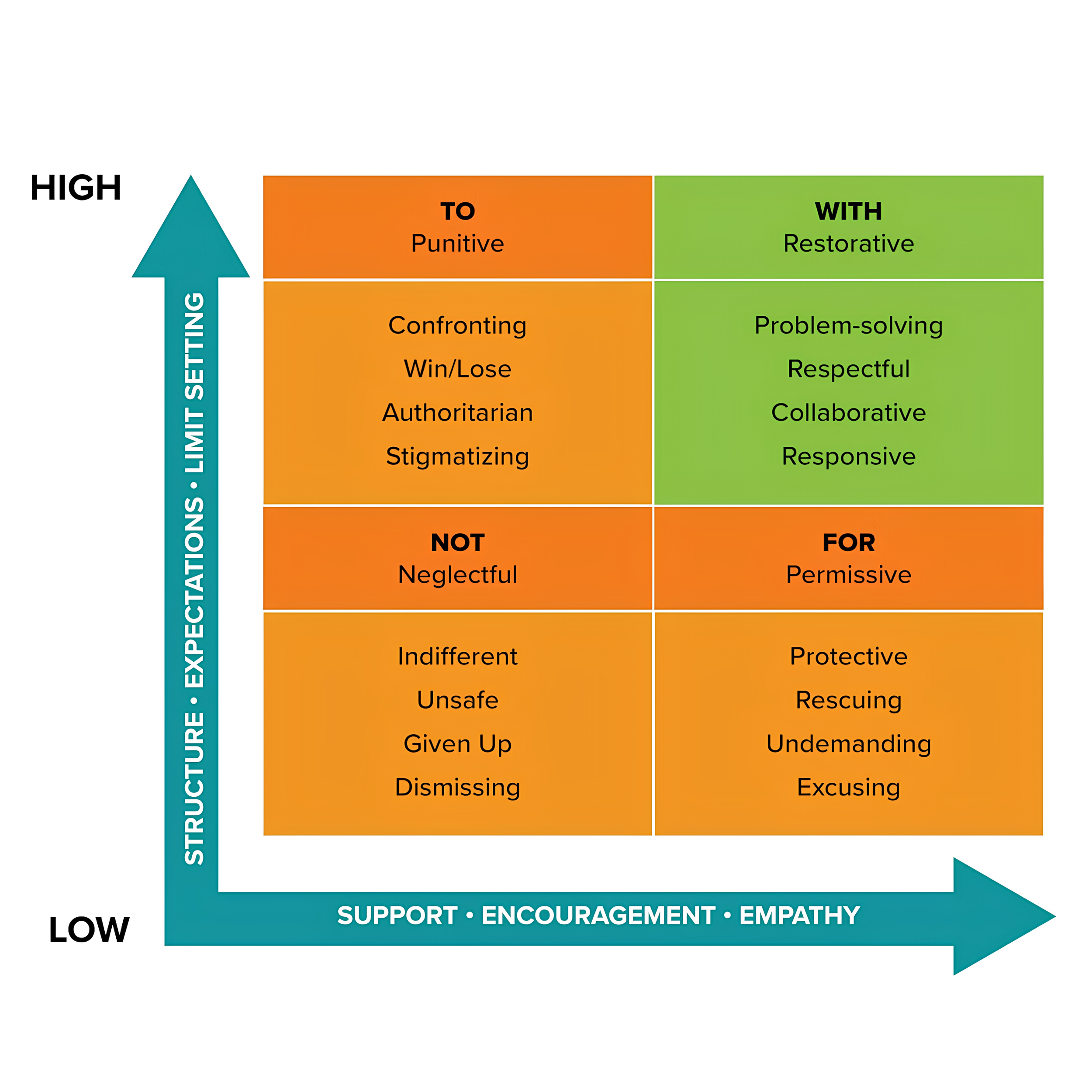
- The Restorative Approach: Healing Power of With 2×2 (Figure 5.1) describes four basic approaches to maintaining social norms and behavioral boundaries.
- Aim to do things WITH others by providing high support, encouragement and empathy AND maintaining high expectations (top right, green box).
- We may sometimes feel pulled to do FOR others who have experienced trauma (bottom right box) out of a wish to help them and to avoid burdening them. However, when we don’t hold students and others to high expectations, this can inadvertently disempower them and get in the way of them working towards their highest aspirations and abilities.
- When we do things TO others (top left box) by providing high structure and limit setting without also providing empathy and support, this response can be overly punitive and stigmatizing. This is particularly true when challenging behavior is due to under-developed skills rather than a lack of will/motivation (e.g., when the behavior is related to lagging skills resulting from trauma or a loss of skills resulting from being triggered into survival mode).
- Sometimes our reactions can fall into the NOT box (bottom left) when we are extremely burnt out and feel like “there is nothing I can do, and I don’t care.” This reaction can be harmful not only to others but to ourselves.
Figure 5.1 Restorative Approaches: The Healing Power of With