
Empowerment and Collaboration

Key Concepts
Key Concept #1 Trauma makes us feel helpless and powerless.
  • One thing that makes trauma so traumatic is that despite our attempts to overcome or escape the overwhelming stressor, we are unable to do so, which leaves us feeling helpless and powerless.
  • When we further disempower someone by taking away their voice and their choice, this can be triggering or retraumatizing because it can echo with the helplessness they experienced in the face of traumatic events.
  • Sociocultural trauma can leave historically oppressed and marginalized groups feeling hopeless and powerless both individually and collectively.
  • Learned helplessness can develop in the face of repeatedly thwarted attempts at doing something to change a painful situation.
    • Those with learned helplessness may need repeated offers of help or opportunities to “do something” about a painful situation, within the context of relational safety, in order to be empowered enough to take action.
    • How to Counter Learned Helplessness
Key Concept #2 Empowerment through having voice and choice leads to well-being and resilience.
  • When we have voice and choice in our work, we are happier, healthier, and more productive. When we have control over how, when, and where we work, it promotes our overall well-being.
  • When we perceive that we have some control or agency over a stressor, this can help reduce the physiological effects of chronic stress.
  • Having a sense of agency, that we can do something about our plight, can also help us heal in the face of trauma and toxic stress.
  • Opportunities for social justice education, advocacy, and activism can counteract the sense of powerlessness and devaluation experienced by those who have experienced collective trauma and/or who have historically been oppressed and marginalized.
Key Concept #3 We are more likely to learn, grow, and make positive changes in our behavior when people in authority do things WITH us, rather than TO us or FOR us.
  • The Restorative Approach: Healing Power of With 2×2 (Figure 5.1) describes four basic approaches to maintaining social norms and behavioral boundaries.
  • Aim to do things WITH others by providing high support, encouragement and empathy AND maintaining high expectations (top right, green box).
  • We may sometimes feel pulled to do FOR others who have experienced trauma (bottom right box) out of a wish to help them and to avoid burdening them. However, when we don’t hold students and others to high expectations, this can inadvertently disempower them and get in the way of them working towards their highest aspirations and abilities.
  • When we do things TO others (top left box) by providing high structure and limit setting without also providing empathy and support, this response can be overly punitive and stigmatizing. This is particularly true when challenging behavior is due to under-developed skills rather than a lack of will/motivation (e.g., when the behavior is related to lagging skills resulting from trauma or a loss of skills resulting from being triggered into survival mode).
  • Sometimes our reactions can fall into the NOT box (bottom left) when we are extremely burnt out and feel like “there is nothing I can do, and I don’t care.” This reaction can be harmful not only to others but to ourselves.

Figure 5.1 Restorative Approaches: The Healing Power of With
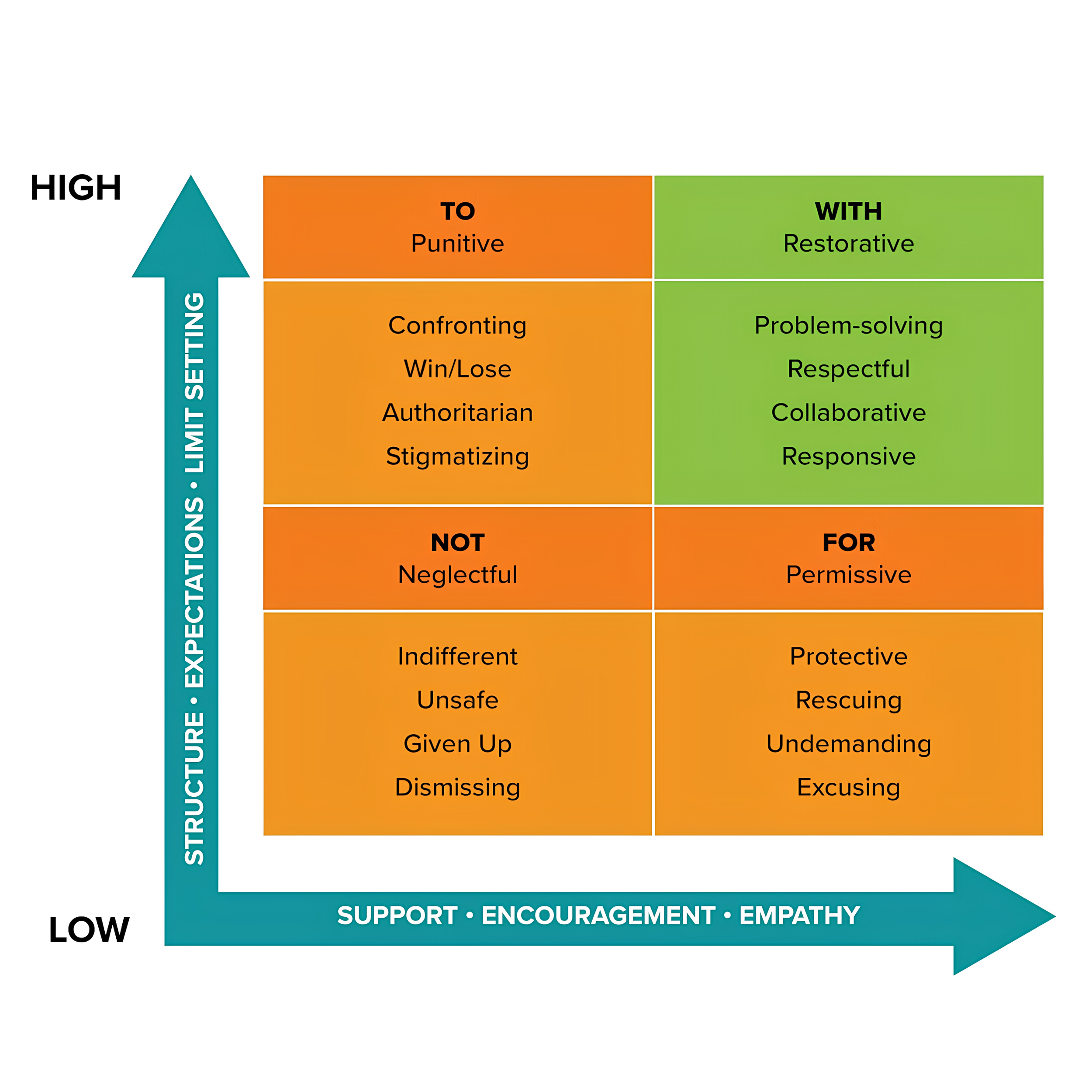
Figure 5.1 Restorative Approaches: The Healing Power of With

Individual and Relational Staff Practices
Key Practice #1 Focus on things you can do that are within your control.
  • When you are up against stressors that are outside of your control, try to focus on what you can control more than what you cannot control.
  • The Circles of Control, Influence, and Concern (Figure 5.2), popularized by Stephen Covey, explores three spheres:
    • The Circle of Concern – the wide range of worries and stressors we might have
    • The Circle of Influence – a narrowing of the outer circle into those worries and stressors that we can do something about – either directly or indirectly
    • The Circle of Control – an even smaller circle, representing the things we can directly control ourselves
  • If we focus on concerns and stressors that are outside of our influence, we risk increasing our stress. By choosing to focus on the circles of control and influence, we move into a more proactive space and take steps that can make a positive difference.

Figure 5.2 Circles of Control, Influence, and Concern

Figure 5.2 Circles of Control, Influence, and Concern
Key Practice #2 Implement practices that foster voice for others.
  • Thoughtfully elicit ideas and concerns from others, and particularly from more marginalized voices, about what is working well or could be improved.
    • Implement suggestion boxes, check-ins, chats, surveys, and feedback forms.
    • Provide leadership opportunities.
  • Provide opportunities for others to tell their own stories.
  • Use equity/talking sticks to ensure all voices are heard.
  • Create regular and informal opportunities for students, caregivers, and staff to provide feedback, and use their ideas and language where possible to ensure that they feel seen and heard.
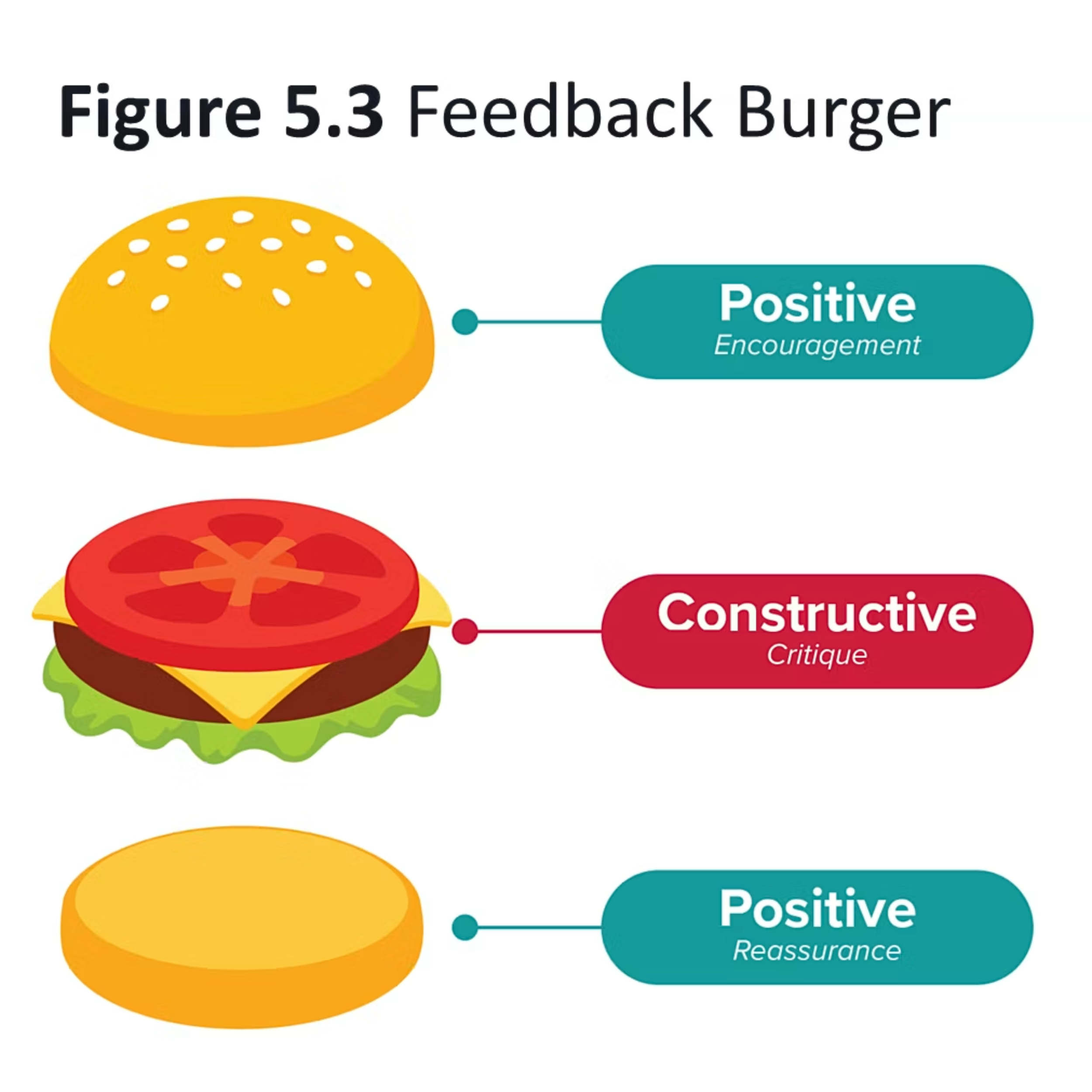
    • Figure 5.3 Feedback Burger
      The Feedback Burger (Figure 5.3) is a useful tool for eliciting feedback that sandwiches positive feedback with more constructive feedback. The practice can be used anonymously until individuals establish a culture of relational safety within which feedback conversations are expected and valued.
    • To use the Feedback Burger, ask students, caregivers, and/or staff:
      • What did you like?
      • What did you wish were different?
      • What would you like to see again?
Key Practice #3 Utilize practices that foster choice for others, particularly when they are impacted by the choices that are made.
  • Give options for how to participate or weigh in on decisions.
  • Offer options for school assignments.
  • Develop student learning goals with students rather than doing this to them or for them.
  • Provide options for how to get help when dysregulated.
Key Practice #4 Establish practices that foster collaboration with others when designing, planning, implementing, and/or evaluating activities and interventions.
  • Work with grade-level co-workers around lesson plans.
  • Engage students in developing classroom activities that support their academic learning.
  • Encourage students to work together on projects.
  • When developing student support plans, involve staff, caregivers, and students in creating the plan, monitoring how it is working, and adjusting the plan as needed.
System-Level Policies, Routines, and Procedures
Systems #1 Establish clear pathways for school community members to have meaningful voice and choice on issues that affect them and that foster ongoing collaboration.
  • For the school community overall:
    • Consistently use processes for collaboration with key stakeholders, including partnering in design, planning, implementation, and/or evaluation of school improvement projects (e.g., design and implementation of school-wide PBIS).
    • Establish systems to elicit ideas and feedback on school programs, policies, and procedures.
      • Elicit feedback throughout the planning and implementation process, not just at the end.
      • Engage school community members through methods such as quarterly surveys, forums, and school town halls.
      • Utilize feedback to make adjustments as needed.
    • Elicit and incorporate the voices of those affected as a routine part of any major decision-making process.
      • Act on what has been voiced whenever possible.
      • Report back to those affected by the decision-making process in order to maximize transparency, to ensure that input has been accurately and appropriately integrated, and to make certain that the solution works for those affected.
    • Provide the opportunity for school community members to choose options that they believe will work best for them whenever possible.
    • Counteract ways that structural oppression exacerbates voicelessness and helplessness for BIPOC and other marginalized students (e.g. LGBTQ students).
      • Proactively and consistently engage students, caregivers, and colleagues from BIPOC and other marginalized groups to elicit their ideas and feedback.
  • For school staff:
    • Include both credentialed and classified staff representation on the leadership team and other school committees.
    • Set timelines and feasible due dates for the rollout of new or existing policies that take into account staff suggestions, requests, or needs, and communicate with staff regarding rollout of policies in a timely and reasonable manner.
    • Establish procedures that use restorative approaches to address and respond to staff concerns.
  • For students:
    • Develop a student council that informs school-wide procedures.
    • Implement student surveys when significant decisions affecting students are being made, incorporate student input into the decision-making process, and let students know how their input informed the decision.
  • For caregivers:
    • Regularly host events, workshops, and celebrations that involve parents and caregivers. Ensure events are accessible and inclusive to all caregivers (different meeting times, interpreters, comfortable settings).
    • Provide opportunities for caregiver input to influence school policy and culture through various communication methods (e.g., phone calls, voice mails, newsletters, forums at accessible times and with interpreters as needed), as well as through membership on decision-making committees.
    • Invite caregiver presentations to school and leadership about their experiences.
  • For community partners:
    • Establish processes for key stakeholders, including partnering community-based organizations when appropriate, to collaborate in the design, planning, implementation, and/or evaluation of school improvement projects (e.g., design and implementation of school-wide PBIS plus incentive system).
Reflection Questions
1

Think of a time that someone helped amplify your voice, or that you helped amplify someone else’s voice.

2

How does your school provide opportunities for student voice?

3

Name a choice you could introduce in your role at school.

Resources