
Compassion and Dependability

Key Concepts
Key Concept #1 Safety and predictability are fundamental to being able to engage our “thinking-learning brains.”
  • Students need to feel safe in order to learn, and educators need to feel safe in order to teach.
  • If the adults don’t feel safe, students won’t feel safe.
Key Concept #2 Safety entails: physical safety, relational safety, emotional safety, predictability.
  • Physical safety: Welcoming and inviting physical environment that is free of physical harm and unnecessary triggers (e.g., loud sounds, slamming doors).
  • Relational safety: Affirming and supportive interactions/relationships that convey unconditional caring and protection from harm in order to minimize dysregulated/triggered reactions and provide support in times of stress. Relational safety can be built with concerted effort and time.
  • Emotional safety: Having the space and ability to express and regulate emotions and manage stress (e.g., mindful moments, breaks).
  • Predictability: Stable and predictable school environment. Clear and positively stated expectations that are agreed upon, well-communicated, and equitably enforced; use of routines and rituals; explicit preparation for changes and transitions.
Key Concept #3 Many existing school-wide strategies (e.g., SEL, PBIS, Restorative Practices) help to create and maintain safety.
  • In many ways, a trauma-informed lens is the “why” that motivates us to continue with many of the best practices we are already doing. In times of stress, these strategies and approaches may fall by the wayside. But a trauma-informed lens reminds us that the “what” of what we can do is at our fingertips if we can create time and space to do them.
Key Concept #4 All individuals experience a predictable escalation/de-escalation cycle in response to a trigger or extreme stressor; where one is on the cycle determines which strategies are most effective for maintaining or returning to a regulated, thinking/learning state.
  • The escalation/de-escalation cycle starts in response to a trigger or stressor and is followed by a period of agitation, acceleration, escalation peak (and potential for re-escalation), then leading to de-escalation, a dip, and eventually recovery (see Figure 3.1).
  • Understanding the escalation/de-escalation pattern can help us choose interventions that will most effectively maintain calm environments, prevent and reduce triggers, and return students/staff to a regulated, thinking/learning state when escalation occurs.
  • It is possible to flatten the intensity of the escalation/de-escalation cycle with effective strategies applied at the appropriate phase in the cycle.
  • Strategies that maintain calm and repair harm post-escalation help towards escalation prevention.

Figure 3.1 Escalation/De-Escalation Cycle
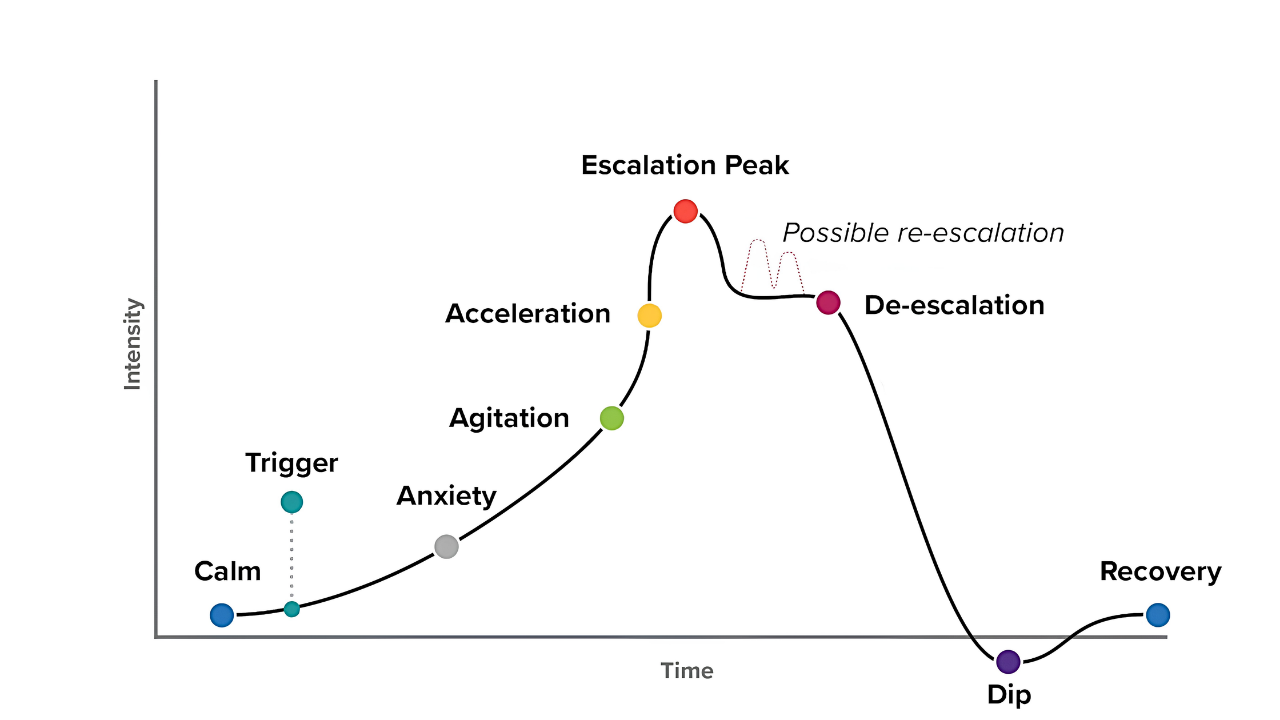
Figure 3.1 Escalation/De-Escalation Cycle
  • The escalation/de-escalation cycle for an escalated individual and a responder are the same shape, but the responder’s cycle is delayed. Where the cycles cross is where re-escalation could occur because an escalated responder is vulnerable to reacting in a dysregulated manner that re-exacerbates the still-dysregulated state of the initially escalated individual. When we escalate one another, the ability to think clearly for both the escalated individual and the responder (cognition cycle) becomes extremely low (see Figure 3.2).

Figure 3.2 Delayed Responder’s Cycle Causes Risk for Re-Escalation

Figure 3.2 Delayed Responder's Cycle Causes Risk for Re-Escalation
Key Concept #5 Our own values, attitudes, and strategies around addressing challenging behaviors are influenced by our own cultural background, upbringing, and social location.
  • When we misinterpret the cause of challenging behavior through the lens of our unexamined cultural biases, this affects how we feel about the behavior, which then influences our response/reaction to the behavior.
  • When our response is disproportionate to the behavior itself (e.g., overly punitive or permissive) this can cause unsafety.
  • When there is disagreement among adults in a school around what causes challenging behavior and how it should be addressed, this causes relational unsafety.
Key Concept #6 The safety of white people should not be prioritized over that of people of color.

Individual and Relational Staff Practices
Key Practice #1 Maintain physical safety within your own area of practice (e.g., classrooms, hallways, cafeteria, yard) that is conducive to learning and teaching.
  • Keep rooms organized and uncluttered.
  • Create seating arrangements that provide for adequate personal space.
  • Manage noise level and behavior to optimize physical safety without compromising relational safety.
  • Minimize risk for physical harm or violence.
Key Practice #2 Foster relational safety by engaging with others in ways that convey unconditional caring and protection from harm; that are self-regulated, non-threatening, and non-judgmental; that attend to the harms of biases; and that foster the ability to repair relational ruptures.
  • Model self-regulated, considerate, and accepting behavior.
  • Promote sense of belonging by decorating walls to include pictures and/or visual aids that reflect the diversity of the school community.
  • Utilize discipline practices that are restorative and equitable (e.g., restorative conversations to repair relational ruptures caused by problematic behavior).
Key Practice #3 Enhance emotional safety by regularly practicing wellness breaks and stress management strategies.
  • Give your and your students’ brains and bodies a break. Examples of wellness breaks include:
    • Physical activity (e.g., stretching, going for a walk)
    • Tactile grounding – using our senses to “come to our senses” (putting on lotion with soothing essential oils, squeezing stress balls)
    • Drinking water
    • Breath work - long slow exhale
  • Utilize classroom regulation stations or Peace Corners.
  • Refrain from dwelling on or talking about upsetting things while having a wellness break to give your mind and body an actual break.
  • Take responsibility for knowing your own stress arousal level, and work to strengthen your stress management skills.
    • When faced with a stressful situation, this is a “cause for a pause.” Pause, breathe, notice what is happening in your body, and ask yourself, “What is happening for me right now?”
    • If you are dysregulated, it’s ok to ask for help.
Key Practice #4 Create predictability through routines and rituals.
  • Implement consistent routines and rituals to structure the day, provide opportunities for regulation, and provide opportunities for social connection and community building. Review these strategies regularly and improve/modify them as needed. Use visual aids and verbal cues as appropriate and give special attention to notifying others of any changes in routines.
    • Establish consistent daily classroom schedules that use visual reminders and that are frequently reviewed with students.
    • Utilize check-in/check-out routines: morning meetings, community circles, journaling, do-now, feeling sticks, temperature check.
    • Use routines for managing transitions in your own areas of practice that are designed to be structured, predictable, and safe. Take proactive steps to accommodate those in need of extra support to stay regulated (e.g., additional time, reminders, proximity).
      • Set routines for lining up at a classroom, walking in the halls, and moving from seat work to rug.
  • TREP Project Consistency and Predictability
    • See activities for Planned Transitions and First 5 Minutes of Class
Key Practice #5 Utilize trauma-informed escalation prevention and de-escalation strategies that align with the points on the escalation/de-escalation cycle.
Key Practice #6 Examine your cultural values, attitudes, and practices towards discipline.
  • Reflect on your cultural background and upbringing, as these factors may subconsciously influence your current attitudes and practices around discipline.
  • Make intentional choices around disciplinary practices that align with your current values (even if they are not congruent with how you were raised).
System-Level Policies, Routines, and Procedures
System #1 Maintain a physically safe school environment conducive to group learning and teaching.
  • Physical environment (e.g., classrooms, hallways, cafeteria, yard):
    • is organized and uncluttered
    • is free of physical hazards
    • has safe drinking water
    • has seating arrangements that provide for adequate personal space
  • Make adjustments to the physical environment to meet the basic individual needs of school community members who may otherwise be triggered or feel unsafe.
    • Change sound of bells indicating beginning and end of passing period to be short soothing tones (rather than traditional shrill bell sound).
    • In middle and high schools, play calming music during passing period.
System #2 Develop and clearly communicate school safety policies and procedures (e.g., secured doors as needed, check-in procedures at front office for school visitors, safety procedures for fires or other threats to physical safety, crisis procedures for physically unsafe student escalations).
  • In response to an individual experiencing a traumatic event, safety policies promote:
    • Collaboration with caregivers and other staff members working directly with the impacted individual; and
    • Use of appropriately private and sensitive methods for communicating about and supporting the impacted individual (e.g., only sharing general information such as “something traumatic has occurred” unless the adult individuals and/or caregivers of minor individuals have given permission to share additional information).
System #3 Maintain values and systems that consistently promote relational safety at school such that each member of the school community feels that others will care for and protect them no matter what (e.g., active culture and climate team, consistently honest and transparent communication procedures, buddy classrooms).
System #4 Strengthen emotional safety by building stress management skills (e.g., SEL curricula around self-awareness and self-management, Peace Corners, and Cool Down Kits).
  • See the Resilience and Social Emotional Wellness Principle for more on culturally responsive, trauma-informed SEL.
  • Establish a Peace Corner or Cool Down Kit in every classroom that students or staff can utilize when they need to self-regulate.
    • Equip Peace Corners with comfortable furniture (e.g., couches, bean bag chairs) and self-regulation tools (e.g., fidgets, lotions, soft blankets, and timers or easily readable clocks).
    • Train all staff to use Peace Corners/Cool Down Kits as part of a larger behavioral support system.
    • Setting Up a Peace Corner and Teaching Students How to Use It
System #5 Increase predictability and stability by creating school-wide routines and rituals.
  • Integrate school-wide routines and rituals into the school day to create a predictable structure and consistent culture across settings. Some examples include:
    • School-wide opening community circle
    • Weekly appreciations via intercom
    • Mindfulness in all classrooms at the beginning of the day
    • Routinized transitions to and from lunch
  • Develop, communicate to all, and follow school calendar and schedules.
    • Regularly use visual reminders and make them available to all.
    • Make any needed changes to the calendar/schedule with sensitivity to the potentially disruptive and triggering nature of changes in routine.
    • Communicate any changes to an established protocol, providing as much notice as possible.
  • Develop, communicate to all, and use school-wide procedures for managing day-to-day transitions to increase predictability and minimize triggers/dysregulation (e.g., procedures for transitioning between periods or for transitioning from recess to classroom).
System #6 Promote predictability and stability by establishing school-wide rules and positively stated expectations (e.g., school-wide PBIS).
  • Ensure rules and expectations are developed in collaboration with the school community, visibly posted, routinely reviewed, and consistently and equitably applied with staff and students.
  • Caregivers are also encouraged and scaffolded to abide by them when at school.
System #7 Establish school-wide procedures for yearly transition plans, particularly for students in need of extra support.
  • Carefully choose educators to be the best match for students in need of extra support.
  • Provide teachers with notes for best supporting these students.
System #8 Establish school-wide procedures for using equitable, differential behavioral supports in response to behaviors that may have been triggered by an underlying stress response or unmet need.
  • These may include systems for utilizing the following alternatives to a traditional disciplinary response:
    • Classroom regulation stations/Peace Corners
    • Buddy classrooms
    • Designated areas outside of classrooms that students can access for self-regulation and co-regulation (that are not the front office)
System #9 Establish school-wide procedures for discipline practices that prioritize a restorative and equitable approach and minimize punitive and exclusionary measures such as suspension and expulsion.

Figure 3.3 Three Tiers of School-Based Restorative Justice

Figure 3.3 Three Tiers of School-Based Restorative Justice
System #10 Provide professional development on trauma-informed de-escalation to all staff, and establish systems that prevent further escalation of challenging behaviors.
Reflection Questions
1

What is one way your school helps adults (e.g., staff, caregivers) feel safe?

2

What is a practice you use in your role that promotes safety & predictability?

3

What is one way that you can improve relational safety within your role at school?

Resources